Instagram API pricing is not one number. If you are adding publishing to a product, the cost is usually a mix of platform requirements, the feature you build, and the work required after launch.
That is why a low monthly vendor price can still be expensive for the wrong product, and why a direct integration can become costly after the first platform change or failed publish job. This guide gives you a way to compare both routes, a unified publishing API or your own Graph API integration, before you commit.
One API instead of the Graph API plumbing. InvisibleAPI is one job-based API for Instagram and X. Connect the account, create a publishing job, poll it until it reaches published.
Get API keyInstagram API pricing has three parts
The first mistake is treating an API price as the whole price. It is only one part of the decision.
1. Platform access and publishing requirements
Meta’s current publishing guide covers the work your product has to satisfy before it can publish. That includes an Instagram professional account, an access token, the required permissions, publicly reachable media, and status checks while media is processed. Read Meta’s Instagram publishing guide.
Those requirements matter even when you do not receive a separate vendor invoice for them. They shape onboarding, support, media hosting, and the publishing flow your team must own.
2. The feature you build
A direct integration is more than a request that publishes an image. A production feature normally needs account connection, token handling, media validation, user-facing errors, scheduling, a way to inspect delivery state, and a path for support when the provider rejects a post.
For a narrow internal workflow, that work can be the right trade. For a product that lets many customers connect accounts, the ownership surface grows with every connected social account and every workflow you offer.
3. The work after launch
The recurring cost is often the part that does not appear in a plan comparison. Someone still owns expired access, provider changes, failed publishing attempts, retries, support tickets, and the difference between a job that is accepted and a post that is actually published.
A useful rule: Compare the subscription price with the operating work it replaces, not only with the first version of your integration.
Direct integration versus a managed publishing API
Neither route is automatically cheaper. The useful question is where you want the responsibility to sit.
| Decision area | Direct Instagram integration | Managed publishing API |
|---|---|---|
| Platform flow | Your team implements and maintains it | Provider exposes one publishing model |
| Account connection | Your team owns the flow and support path | Provider may handle the connection layer |
| Product control | Maximum control over your implementation | Control is bounded by the provider’s documented surface |
| Recurring spend | Engineering and infrastructure time | Subscription or usage-based vendor cost, plus your application work |
| Best fit | One focused workflow with a clear owner | A product that needs publishing infrastructure without owning every platform detail |

Published vendor prices can give you a reference point, but they are not a substitute for your own cost model. For example, as of September 2, 2026, Ayrshare lists a $149 monthly Premium plan for one social profile and a $299 monthly Launch plan for up to 10 profiles. Its pricing is profile-based, so a product team needs to model active customer accounts rather than only internal seats.
Treat any vendor price as dated input. Check it again when you are ready to buy, then compare what the plan includes with the engineering and support work you would otherwise keep.
Use this table before you compare plans
| Question | Why it changes the cost | What to verify |
|---|---|---|
| How many social accounts will customers connect? | Account growth affects onboarding, support, and some vendor cost models | Billing unit, plan thresholds, and account limits |
| What must your product do after publish? | Scheduling, delivery status, retries, and support add operational scope | Job state, failure behavior, and reporting needs |
| Do you need only Instagram today? | A focused native implementation may fit a focused requirement | Product roadmap and expected platform coverage |
| Who owns provider changes? | Platform updates become engineering work when you build direct | Maintenance owner, alerting, and release process |
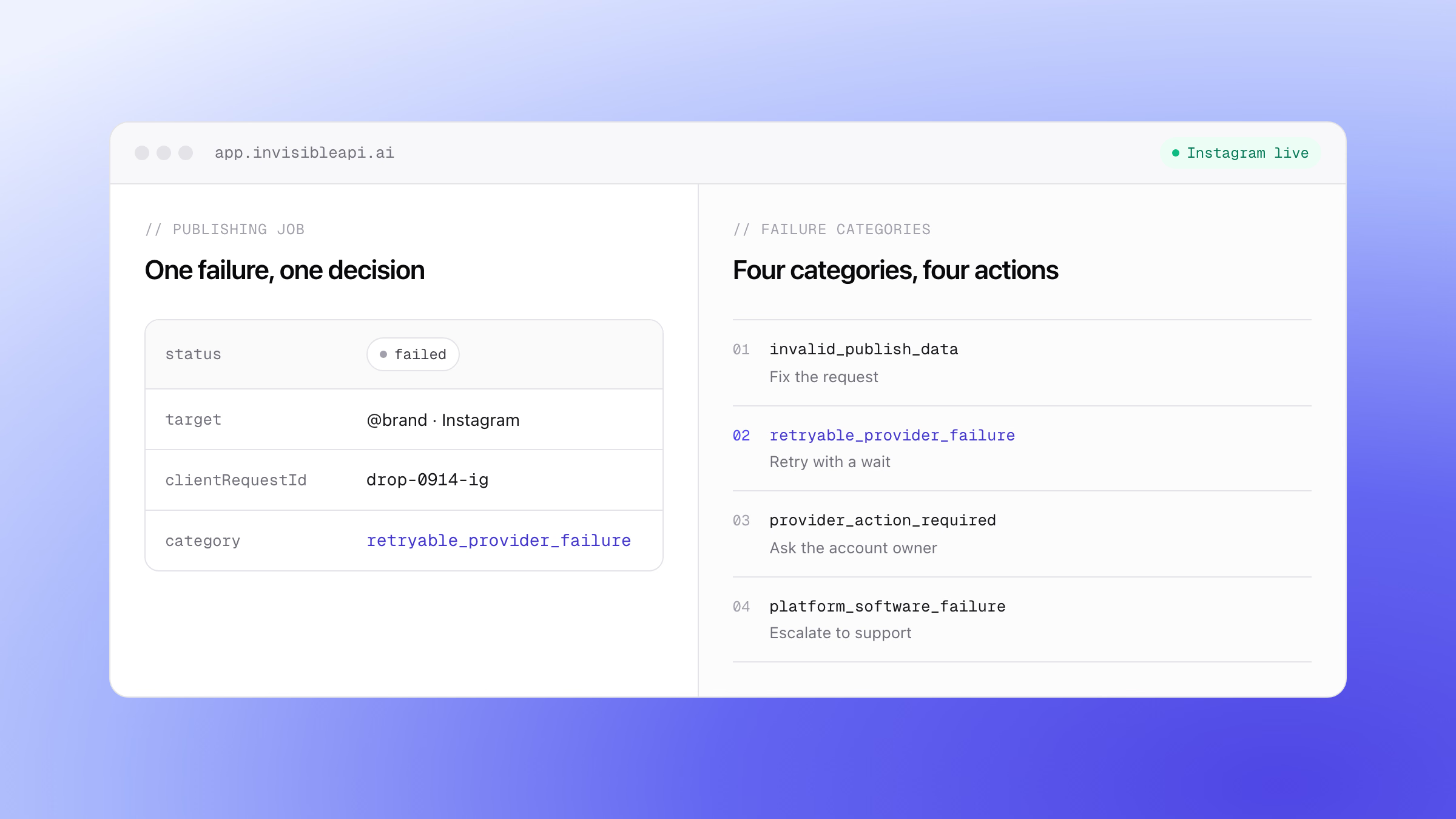
| Can a failed publish be explained to the customer? | A generic provider error creates support work | Error categories, retry guidance, and delivery visibility |
This table prevents a false comparison. A plan that looks expensive on day one may include work your engineers would otherwise need to build. A direct route that looks inexpensive may be right when your scope is deliberately small.
Four questions that decide the cheaper route

Are you shipping one focused workflow or a product capability?
If you are building one controlled workflow for your own organization, a direct integration can be a sensible choice. If customers connect their own social accounts inside your product, connection lifecycle and delivery support become part of your product surface.
Who owns reliability after launch?
Decide this before comparing plans. A provider subscription can shift some maintenance work outside your team. A direct route keeps control in house, but it also keeps the responsibility for monitoring, retries, and changing platform requirements. Retry work is the part teams underestimate most, and which Instagram API errors to retry walks through the codes and the decision behind each one.
How many connected social accounts will you support?
The account count changes both sides of the comparison. It increases your support and operations scope, and it can change vendor pricing when a provider bills by profile, source, or usage.
Do you need Instagram only today or a normalized publishing layer?
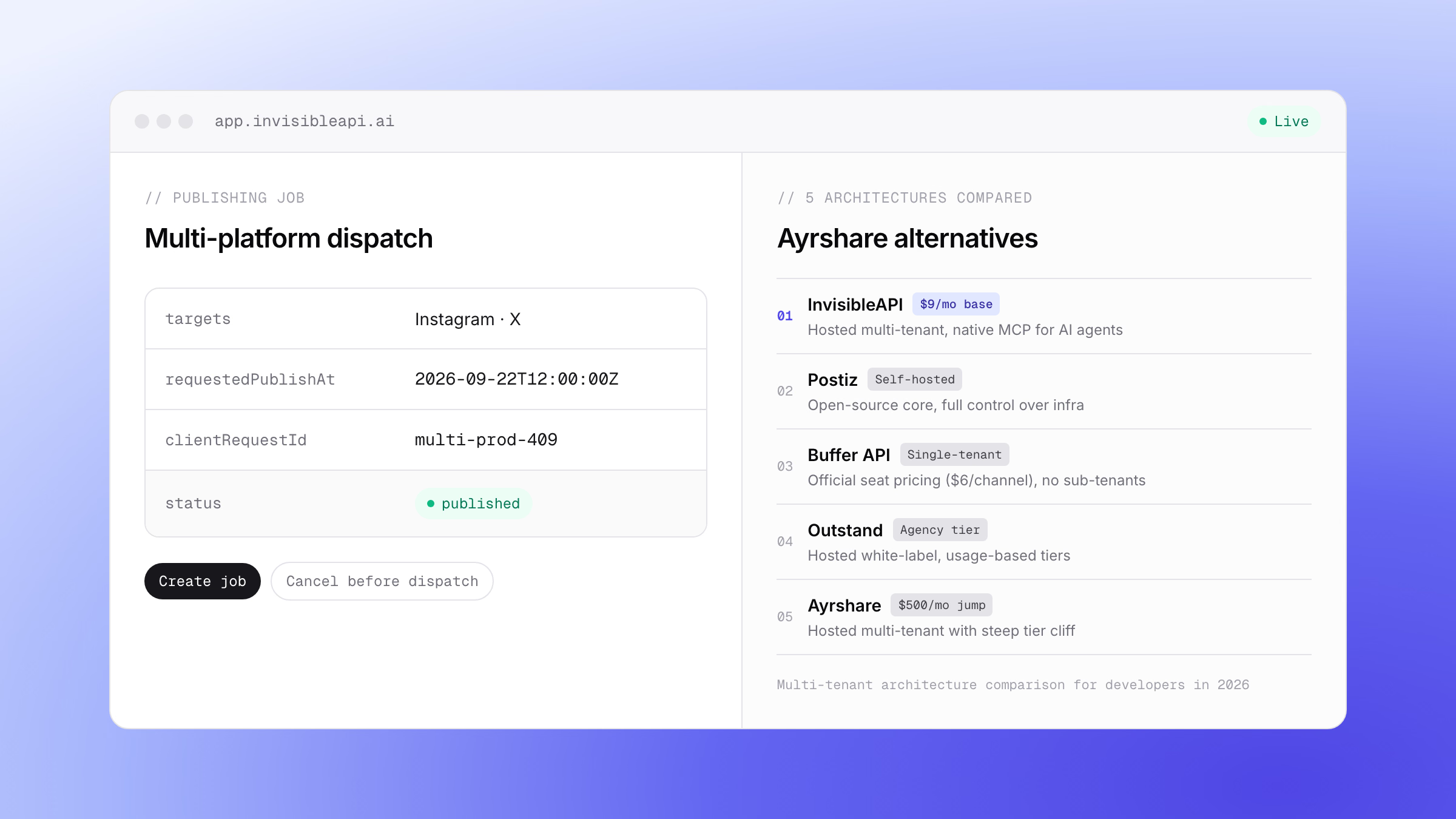
Do not pay for platform coverage you will not use. At the same time, be clear about your roadmap. A product that will need a shared publishing model across more than one live platform may value a consistent job lifecycle earlier than a single-platform project does. If X is on that roadmap, the X API pricing guide covers what posting there costs in 2026. For teams evaluating multi-tenant hosted infrastructure across vendors, compare Ayrshare alternatives for developers.
Where InvisibleAPI fits today
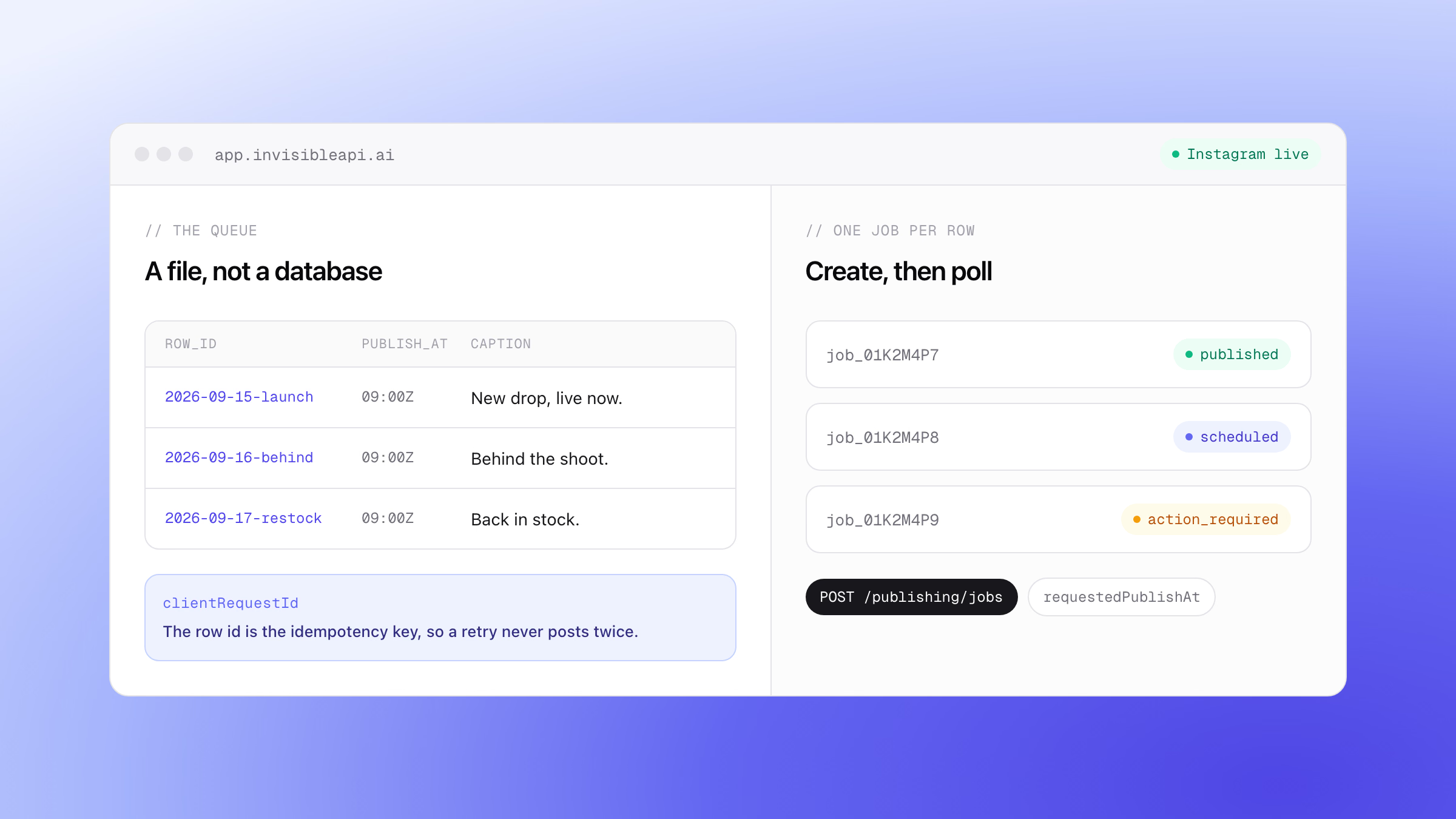
InvisibleAPI is a publishing API for Instagram and X today. A publishing job can target connected social accounts, schedule ahead with requestedPublishAt, and use clientRequestId so a retried request never double-posts. Jobs can be canceled before dispatch, and delivery outcomes show which target succeeded or failed preflight.
That makes it relevant when your product needs more than a one-off publish action. Start with the platform availability table to confirm the live surface, then use the quick start guide to see the job-based flow. If scheduling is part of the requirement, the social media publishing calendar template shows the workflow pattern.
InvisibleAPI prices by connected source. Use how pricing works to model your own connected account count against the current calculator. If the volume question is really an unattended-publishing question, building the publishing loop yourself covers the queue, the limit check, and the retry rules.
Price the work, not just the plan
Choose the route that gives your team a supportable publishing feature, not the lowest number on a comparison table. When you are ready to model your own account count and usage, See pricing.
Post to X and Instagram from one API.
Connect the accounts once, create a publishing job, and poll it until it is published. Preflight validation catches a broken post before it reaches the platform, and a clientRequestId makes retries safe.